You’ll find several particle size analyzer types suited for distinct needs: laser diffraction offers rapid, broad-range sizing; dynamic light scattering targets nanoparticles with high resolution; sieve and sedimentation methods handle coarser or fine particles, respectively; image analysis provides detailed morphology laballiance, while acoustic spectroscopy excels in dense or opaque suspensions without dilution. Choosing depends on your sample type, resolution demands, and workflow integration. Explore further to match your lab’s precision, throughput, and material specifics effectively.
Laser Diffraction Particle Size Analyzers
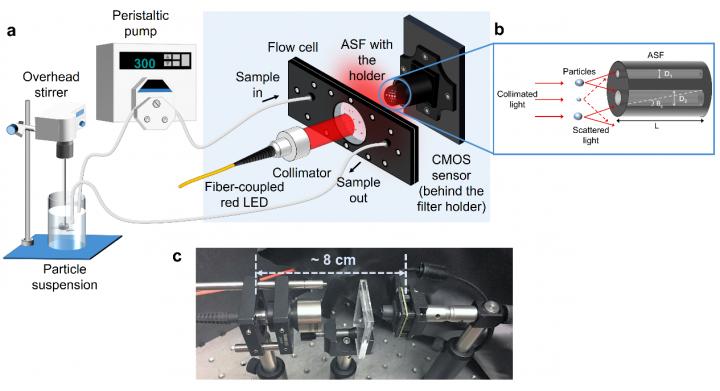
Laser diffraction particle size analyzers rely on measuring the angular variation in intensity of light scattered as a laser beam passes through a dispersed particulate sample. You’ll appreciate how laser scattering offers rapid, non-destructive measurement across a wide size range, enabling you to characterize particle distributions accurately. Critical to this process is precise beam profiling https://laballiance.com.my/, which guarantees the laser’s spatial intensity distribution is well-defined, minimizing measurement errors and enhancing reproducibility. By analyzing the scattering pattern, you can infer particle size and distribution with high resolution, empowering you to optimize formulations or processes freely. This technique’s robustness and speed make it ideal when you demand accurate particle characterization without compromising operational flexibility or freedom in experimental design.
Dynamic Light Scattering Instruments
While laser diffraction offers rapid insights into particle size distributions through scattering intensity at varying angles, dynamic light scattering (DLS) instruments provide complementary capabilities by analyzing the temporal fluctuations in scattered light intensity caused by Brownian motion. You’ll find DLS especially valuable when evaluating nanoparticles or submicron suspensions, as it delivers high-resolution size data based on diffusion coefficients. Precise sample preparation is essential to minimize aggregation and multiple scattering effects, ensuring accurate measurements. Additionally, temperature control plays a critical role because Brownian motion—and therefore scattering fluctuations—are temperature-dependent; maintaining stable conditions enhances reproducibility. DLS instruments offer you a non-invasive, rapid approach to evaluating particle size distributions in colloidal systems, but careful attention to these operational parameters is vital to fully leverage their analytical power within your lab environment.
Sieve Analysis Techniques
When analyzing larger particles or granular materials, sieve analysis techniques provide a straightforward and reliable method for determining particle size distribution. You’ll choose between dry sieving and wet sieving based on the sample’s nature. Dry sieving is ideal for free-flowing, non-cohesive powders, allowing particles to pass through stacked sieves under mechanical shaking. Wet sieving, on the other hand, is suited for fine or cohesive materials that tend to agglomerate; here, water or another liquid medium facilitates particle separation. Both methods require calibrated sieve meshes to guarantee accuracy and repeatability. By carefully selecting the appropriate sieving technique and controlling parameters such as agitation time and mesh size, you gain precise insight into particle size distribution critical for quality control, processing, or research applications.

Sedimentation-Based Particle Size Measurement
Since particle size markedly influences material behavior in suspensions, sedimentation-based measurement offers a distinct approach by analyzing settling velocities in a fluid medium. You’ll rely on Stokes’ law to correlate particle size with settling velocity, but must account for hindered settling in concentrated systems. Gradient columns enable precise separation by establishing stable density layers, improving accuracy. This method suits you if you:
- Value a direct, physical principle-based technique for particle size distribution.
- Need to measure fine particles that are challenging for sieve analysis.
- Desire freedom from complex optics, relying instead on fluid dynamics.
Sedimentation-based analyzers provide robust data for suspensions, but make sure you correct for interaction effects and carefully control fluid properties to maintain reliability.
Image Analysis Particle Size Analyzers
You’ll find that image analysis particle size analyzers use digital imaging to capture and measure individual particles based on shape and size parameters. This method offers precise morphological data but can be limited by sample preparation and optical resolution. Understanding these factors is key to applying the technique effectively across industries like pharmaceuticals, materials science, and environmental monitoring.
Principles of Image Analysis
Image analysis particle size analyzers capture and process digital images to determine particle dimensions with high accuracy. You’ll rely on advanced optics and image processing algorithms to extract critical data about particle shape and surface texture, which are essential for thorough characterization. The core principles include:
- Image Acquisition: Capturing high-resolution images using controlled lighting and magnification to reveal fine surface details.
- Image Processing: Applying edge detection and segmentation techniques to isolate individual particles from the background.
- Quantitative Analysis: Measuring geometric parameters such as Feret diameter, aspect ratio, and texture metrics to quantify particle morphology precisely.
Advantages and Limitations
Although image analysis particle size analyzers provide detailed morphological data that other techniques often miss, you should be aware of both their strengths and limitations to select the right tool for your application. They excel in delivering visual confirmation and size distribution metrics, essential for complex particle shapes. However, the cost tradeoffs can be significant—high-resolution imaging systems and software licenses increase upfront and maintenance expenses, which may not suit all budgets. Additionally, regulatory considerations must guide your choice; certain industries demand validated, standardized methods that image analysis may not fully satisfy without rigorous calibration and documentation. While they offer freedom in qualitative and quantitative analysis, balancing these advantages against cost and compliance requirements guarantees you deploy a method aligned with your lab’s operational and regulatory landscape.
Applications in Various Fields
When selecting a particle size analyzer, understanding its applications across various fields is essential for ensuring peak performance and relevance. Image analysis particle size analyzers offer precise insights indispensable for diverse industries. You’ll find them indispensable in:
- Environmental monitoring – accurately evaluating particulate matter to safeguard air and water quality.
- Pharmaceutical formulations – optimizing drug delivery by controlling particle size distribution for efficacy and safety.
- Material science – characterizing powders and suspensions to enhance product consistency and performance.
Acoustic Spectroscopy for Particle Sizing
You’ll find that acoustic spectroscopy measures particle size by analyzing sound wave attenuation and velocity through a dispersed sample. This technique suits various applications, including concentrated suspensions and emulsions, where optical methods struggle. While it offers in situ measurement and broad size range detection, you should also consider factors like medium properties and particle concentration that can affect accuracy.
Principle of Acoustic Spectroscopy
In analyzing particle size, acoustic spectroscopy relies on the interaction between sound waves and dispersed particles within a medium. You measure sound attenuation and ultrasonic scattering as sound waves traverse the sample, revealing particle characteristics. This method provides you with a non-invasive, real-time analysis, ideal for complex suspensions.
By focusing on:
- Quantifying sound attenuation caused by particle presence and size distribution
- Analyzing ultrasonic scattering patterns to infer particle concentration and morphology
- Utilizing frequency-dependent responses to enhance resolution and accuracy
You gain freedom from traditional optical constraints. Acoustic spectroscopy’s principle harnesses precise physical phenomena, allowing you to decode particle size distributions efficiently, even in opaque or highly concentrated samples. This empowers you to make informed decisions with confidence and flexibility.
Applications in Particle Analysis
Building on the principles of acoustic spectroscopy, its application in particle analysis offers a robust approach to sizing particles across diverse industries. You can leverage this technique to monitor particle size distributions in real-time, enabling precise quality control in formulations like paints, pharmaceuticals, and food products. Acoustic spectroscopy excels in handling concentrated suspensions where traditional optical methods struggle, giving you accurate data without dilution. By integrating this method into your workflow, you can enhance process optimization, reducing waste and ensuring consistent product performance. Its sensitivity to particle size variations allows you to detect subtle changes during production, facilitating immediate corrective actions. Ultimately, this approach empowers you to maintain stringent quality standards while maximizing operational efficiency across various manufacturing environments.
Advantages and Limitations
Although acoustic spectroscopy offers significant benefits for particle sizing, it’s important to understand both its strengths and limitations to apply it effectively. You’ll appreciate its ability to analyze concentrated suspensions without dilution, enhancing measurement accuracy in complex samples. However, you must weigh the cost tradeoffs carefully.
- High sensitivity: It detects subtle size differences in opaque or dense dispersions, granting you detailed insights.
- Non-destructive testing: You maintain sample integrity, preserving freedom for subsequent analyses.
- Equipment expense: Initial investment and maintenance costs can be substantial, potentially limiting accessibility.
Conclusion
When selecting a particle size analyzer, you need to match the method to your sample’s characteristics and measurement goals. Laser diffraction offers broad range analysis, while dynamic light scattering excels with nanoparticles. Sieve and sedimentation techniques suit coarser or density-varied particles. Image analysis provides detailed morphology, and acoustic spectroscopy works well in concentrated suspensions. By understanding each method’s strengths and limitations, you can guarantee accurate, reliable data tailored to your lab’s specific requirements.
…